

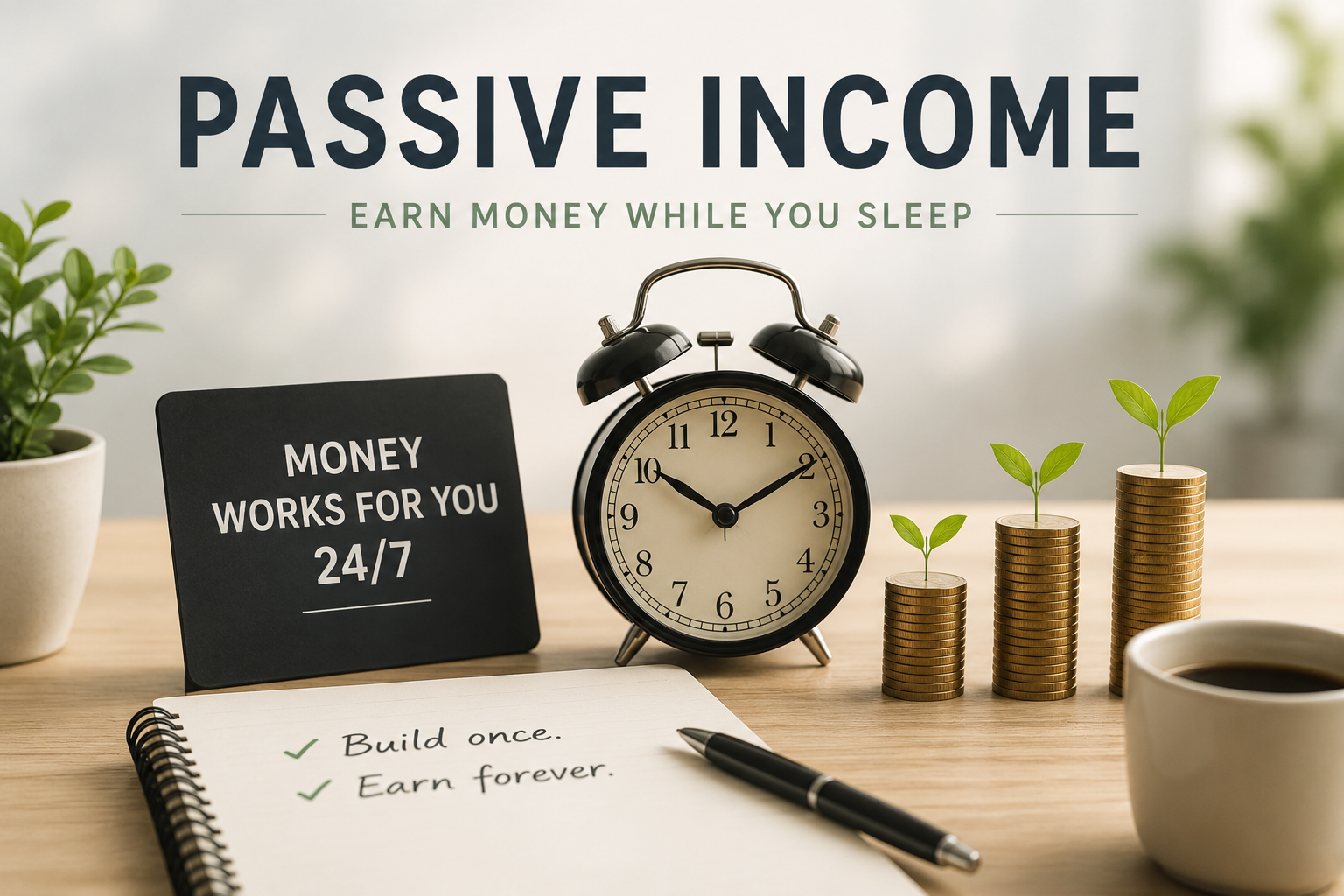
The pursuit of financial independence is a cornerstone of modern economic aspiration. While traditional employment offers a reliable income stream, the concept of passive income presents a compelling alternative, allowing individuals to generate earnings with minimal ongoing effort. This approach is not about getting rich quick, but rather about strategically building assets and systems that work for you, ultimately liberating you from the constant need for active labor.
Understanding Passive Income
Passive income refers to earnings derived from an enterprise or investment in which a person is not actively involved on a day-to-day basis. Its significance in achieving financial independence lies in its potential to decouple income from time. Unlike active income, which is directly earned through labor, passive income continues to flow even when you’re not actively working. This allows for greater financial flexibility, the potential for accelerated wealth accumulation, and the freedom to pursue personal interests or early retirement. There are numerous types of passive income streams, each with its own risk and reward profile. These commonly include:
- Real Estate: Rental properties, REITs (Real Estate Investment Trusts).
- Investments: Dividend stocks, bonds, peer-to-peer lending.
- Online Businesses: Creating and selling digital products (e.g., e-books, online courses), affiliate marketing, monetizing a blog or YouTube channel through advertising.
- Intellectual Property: Royalties from books, music, or patents.
Statistics indicate a growing interest in passive income. A recent survey found that over 70% of millennials are actively seeking ways to generate passive income, highlighting a generational shift towards financial autonomy and diversified income streams. This trend is fueled by increasing awareness of financial planning tools and the accessibility of online platforms.
Top Passive Income Strategies
Effectively building passive income requires careful planning and execution. Here are some of the most effective strategies:
- Rental Properties: This involves purchasing real estate and renting it out to tenants.
- Example: Buying a residential property and leasing it out on a monthly basis.
- Pros: Potential for significant appreciation, stable cash flow, tax advantages.
- Cons: High initial capital investment, ongoing management responsibilities (unless outsourced), potential for vacancies and tenant issues.
- Dividend Stocks: Investing in companies that distribute a portion of their profits to shareholders in the form of dividends.
- Example: Purchasing shares in established companies like Johnson & Johnson or Coca-Cola.
- Pros: Relatively passive once invested, potential for capital gains in addition to dividends, accessible with lower capital than real estate.
- Cons: Stock market volatility, dividend cuts are possible, requires research to select stable companies.
- Affiliate Marketing: Promoting other companies’ products or services and earning a commission on sales generated through your unique affiliate links.
- Example: Creating a niche blog reviewing electronics and including affiliate links to Amazon.
- Pros: Low startup costs, no need to create your own product, scalable.
- Cons: Requires building an audience, dependent on merchant’s terms, income can be inconsistent.
- Creating and Selling Online Courses/Digital Products: Developing a digital asset that can be sold repeatedly.
- Example: An expert in graphic design creating a comprehensive Photoshop tutorial course.
- Pros: High-profit margins once created, scalable, can be automated.
- Cons: Requires significant upfront time and expertise to create a high-quality product, marketing is crucial.
How to Get Started with Passive Income
Embarking on your passive income journey requires a structured approach.
- Set Clear Financial Goals: Define what financial independence means to you. Quantify your desired passive income amount and the timeline for achieving it. Align these goals with your overall financial plan.
- Assess Your Resources: Evaluate your available capital, time, skills, and risk tolerance. This will help you determine which passive income strategies are most feasible for your circumstances.
- Research and Select Strategies: Thoroughly research different passive income streams. Understand their requirements, potential returns, and associated risks. Choose strategies that align with your assessment of resources and goals.
- Develop a Plan of Action: Outline the specific steps needed to implement your chosen strategies. This might involve saving for a down payment, researching investment opportunities, or developing a digital product.
- Start Small and Scale: Begin with a manageable investment or project. As you gain experience and generate income, reinvest your earnings to scale your passive income streams.
Potential Challenges and Considerations
Building a substantial passive income stream is not without its hurdles.
- Initial Costs: Many passive income strategies, particularly real estate and significant investments, require a substantial upfront capital outlay.
- Time Investment: While the income is passive, the initial setup and ongoing oversight often demand a significant time commitment. Creating digital products, building an audience for affiliate marketing, or managing rental properties all require dedicated effort.
- Risk Management: All investments and business ventures carry inherent risks. Market fluctuations, economic downturns, and unforeseen operational issues can impact your income. Implementing robust risk management strategies, such as diversification and thorough market research, is crucial.
- Maintenance and Adaptation: Passive income streams are not entirely “set it and forget it.” Properties require maintenance, investments need periodic review, and online platforms evolve. Staying informed and adapting to changes is essential for long-term success.
Maintaining a balance between active and passive income efforts is key. Initially, your active income will likely fund your passive income ventures. As your passive income grows, it can reduce your reliance on active work, offering greater freedom and flexibility. This strategic synergy is the true power of pursuing passive income for financial independence.