Ignoring warning signs can lead to significant problems down the line, impacting your savings, investments, and overall well-being. This blog post will illuminate common financial red flags that you should never overlook, empowering you to take proactive steps towards a healthier financial future.
Understanding the Importance of Financial Health
Financial health isn’t just about having money; it’s about having a sustainable and manageable relationship with your finances. It involves making informed decisions, planning for the future, and being able to withstand unexpected financial shocks. When red flags appear, they are signals that this balance is being disrupted, and intervention is necessary.
Key Financial Red Flags to Watch For
1. Consistent Overspending and Lack of Budgeting
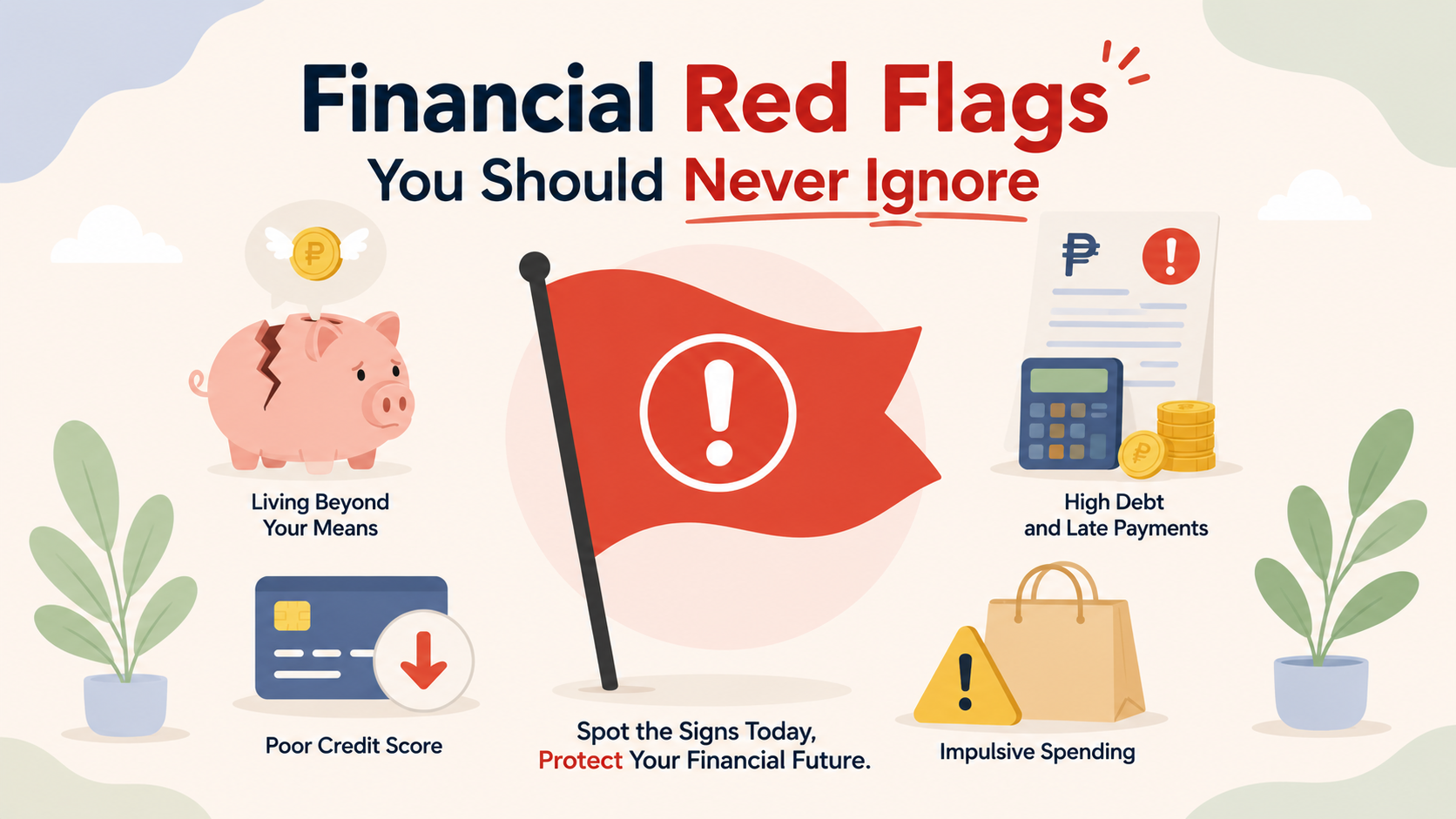
One of the most fundamental financial red flags is a persistent pattern of spending more than you earn without a clear plan. This often manifests as a lack of a budget or an inability to stick to one. If you regularly find yourself short on cash before your next paycheck or relying on credit to cover daily expenses, it’s a significant warning sign.
2. Mounting and Unmanageable Debt
While some debt, like a mortgage or student loans, can be a tool for growth, accumulating high-interest debt without a clear repayment strategy is a major red flag. This includes credit card debt that you consistently only pay the minimum on, payday loans, or multiple personal loans that are becoming difficult to service. High debt levels can severely limit your financial flexibility and increase stress.
3. Financial Red Flags: Neglecting an Emergency Fund
Life is unpredictable, and unexpected expenses like medical emergencies, job loss, or major home repairs can arise at any time. A critical financial red flag is the absence of an adequate emergency fund. Without savings set aside for these “rainy days,” individuals are often forced to go into debt or make drastic financial decisions when faced with a crisis. Learn more about Emergency Fund here
4. Irregular or Inconsistent Income
While not always within an individual’s immediate control, an income stream that is highly irregular or inconsistent without proper financial planning can be a red flag. This makes budgeting and saving extremely challenging, as there’s no predictable financial baseline to work from. Developing strategies to smooth out income or build larger savings buffers is essential in such situations.
5. Ignoring Investment and Retirement Planning
Procrastinating on or completely neglecting to invest for the future, especially retirement, is a significant long-term financial red flag. Compound interest is a powerful tool, and the earlier you start investing, the more time your money has to grow. Failing to plan for retirement can lead to financial insecurity and a reduced quality of life in your later years. Learn about investing here
6. Lack of Financial Literacy and Education
A general lack of understanding about basic financial concepts, such as interest rates, credit scores, insurance, and investment principles, can be a subtle but pervasive red flag. Without this knowledge, individuals are more susceptible to making poor financial decisions, falling prey to scams, or simply not optimizing their financial resources.
7. Living Beyond Your Means
This goes beyond simple overspending and involves maintaining a lifestyle that is not supported by your current income. This could involve frequent expensive vacations, luxury purchases, or keeping up with peers who may have higher incomes. Constantly trying to project an image of wealth that doesn’t align with your financial reality is a recipe for debt and stress.
Addressing Financial Red Flags
Recognizing these financial red flags is the first and most important step. Once identified, it’s crucial to take action:
Create and Stick to a Budget: Understand where your money is going and make conscious spending decisions.
Prioritize Debt Reduction: Develop a plan to pay down high-interest debt systematically.
Build an Emergency Fund: Aim to save 3-6 months of living expenses.
Seek Financial Education: Read books, take courses, or consult with financial advisors.
Automate Savings and Investments: Make saving and investing a regular, non-negotiable part of your financial routine.
Adjust Your Lifestyle: Align your spending with your income and financial goals.
FAQs about Financial Red Flags
Q1: What is the most common financial red flag?
A1: While many are prevalent, excessive debt accumulation, especially high-interest credit card debt, is often cited as one of the most common and dangerous financial red flags.
Q2: How much should I have in my emergency fund?
A2: A widely recommended target for an emergency fund is to have enough to cover 3 to 6 months of essential living expenses. The exact amount can vary depending on your job security, dependents, and individual circumstances.
Q3: Is it ever okay to have credit card debt?
A3: While it’s best to avoid credit card debt altogether, it can be manageable if you consistently pay off the balance in full each month, thereby avoiding interest charges. Relying on credit cards for ongoing expenses without a plan to repay is a significant red flag.
Q4: I have an inconsistent income. What are some strategies to manage my finances?
A4: With an inconsistent income, it’s crucial to build a larger savings buffer. Track your income and expenses closely, and aim to save aggressively during periods of higher income to cover leaner months. Consider creating a “variable income budget” that adjusts based on your earnings.
Q5: When should I consider consulting a financial advisor?
A5: You might consider a financial advisor if you have complex financial situations, are planning for major life events (like retirement or buying a home), want to optimize your investments, or feel overwhelmed by managing your finances.
Sources used in this blog
Lusardi, A., & Mitchell, O. S. (2014). The economic importance of financial literacy: Theory and evidence. Journal of Economic Literature, 52(1), 5-44.
Lusardi, A., & Mitchell, O. S. (2017). Financial literacy and financial education. Handbook of the Economics of Finance, 5, 371-411.
Consumer Financial Protection Bureau. (n.d.). Consumer Financial Protection Bureau. https://www.consumerfinance.gov/

Founder and writer of Wex Insights. Joshua Brillante publishes practical, research-based articles on personal finance, productivity, leadership, and personal development. As Wex Insights continues to grow, he also shares travel insights that encourage lifelong learning, better decision-making, and meaningful personal growth. Learn more about the author