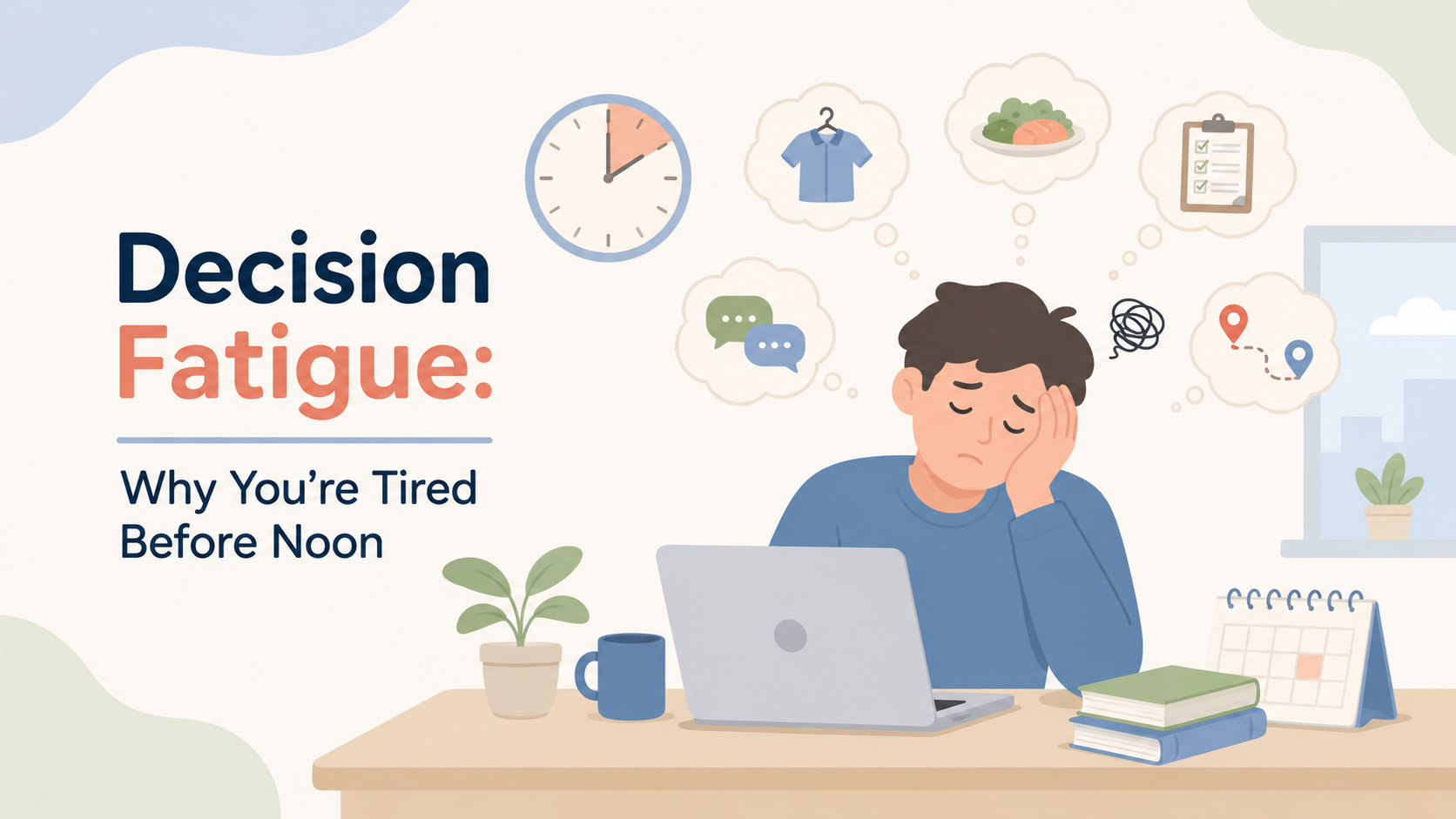
It’s common to feel drained and overwhelmed by the end of the day. However, many professionals experience this exhaustion much earlier, often before lunchtime. This phenomenon is known as decision fatigue, a concept that explains why our ability to make good choices diminishes after a period of intense mental activity. Understanding decision fatigue is crucial for professionals aiming to optimize their productivity and well-being.
Understanding the Roots of Decision Fatigue
Decision fatigue is the idea that our capacity for making decisions is finite. Each choice we make, no matter how small, consumes a portion of our mental energy. As the day progresses and we encounter more choices, our mental resources deplete, leading to poorer decision-making, impulsivity, and a general feeling of exhaustion. This can manifest in various ways, from avoiding decisions altogether to making hasty, ill-considered choices.
Managing Your Mental Resources
To combat the effects of decision fatigue, professionals can adopt several strategies. Prioritizing important decisions for the morning, when mental energy is typically at its highest, is a key tactic. Automating routine decisions through established habits or checklists can also significantly reduce the cognitive load. Furthermore, incorporating regular breaks and ensuring adequate sleep can help replenish mental resources, making it easier to navigate a day filled with choices.
The Impact of Decision Fatigue on Professional Performance
The implications for professionals are far-reaching. It can lead to decreased productivity, increased errors, and a decline in overall job satisfaction. When faced with too many choices, individuals may resort to the path of least resistance, which might not be the most beneficial or strategic option. Recognizing the signs and implementing proactive management techniques are therefore essential for sustained professional success.
Learn How to Stay Productive Without Being Burned Out
FAQs
What are the common symptoms of decision fatigue?
Common symptoms include irritability, difficulty concentrating, procrastination, indecisiveness, and a tendency to make impulsive or suboptimal choices.
How can I prevent decision fatigue in my workday?
Try to tackle your most important decisions early in the day, establish routines for recurring tasks, delegate when possible, and take regular breaks to rest your mind.
Is decision fatigue the same as burnout?
While both can lead to exhaustion, it is specifically related to the depletion of mental resources from making choices. Burnout is a more pervasive state of emotional, physical, and mental exhaustion caused by prolonged stress. Learn more about Signs You’re Experiencing Burnout
How can I improve my decision-making skills when experiencing fatigue?
When fatigued, simplify your options, seek advice from trusted colleagues, or postpone less critical decisions until you feel more refreshed.
Sources used
Baumeister, R. F. (2002). Self-regulation as a limited resource: Behavioral effects of depletion of the self-control strength. Journal of Personality and Social Psychology, 82(2), 247–259.
Vohs, K. D., & Heatherton, T. F. (2000). The natural and self-inflicted: Natural and self-inflicted effects of ego depletion. Journal of Personality and Social Psychology, 79(2), 177–187.
Mayo Clinic Staff. (2023, November 18). Stress management: Stress relief. Mayo Clinic.
American Psychological Association. (n.d.). How does stress affect the body?

Founder and writer of Wex Insights. Joshua Brillante publishes practical, research-based articles on personal finance, productivity, leadership, and personal development. As Wex Insights continues to grow, he also shares travel insights that encourage lifelong learning, better decision-making, and meaningful personal growth. Learn more about the author