In today’s fast-paced world, the pressure to be constantly productive can be immense. We often equate long hours and a packed schedule with success, but this relentless pursuit can lead to a state of exhaustion known as burnout. The key to sustainable productivity lies not in working harder, but in working smarter, focusing on efficiency, well-being, and strategic energy management. This guide will explore actionable techniques to help you achieve your goals without sacrificing your mental and physical health.
We often hear that productivity is the key to success: wake up early, do more, push harder. But what happens when “doing more” starts to wear you down? It can take a serious toll.
Burnout is real and it’s on the rise in our always-connected world. The good news? You don’t have to choose between being productive and taking care of your mental health. With the right approach, you can achieve your goals while protecting your energy and focus.
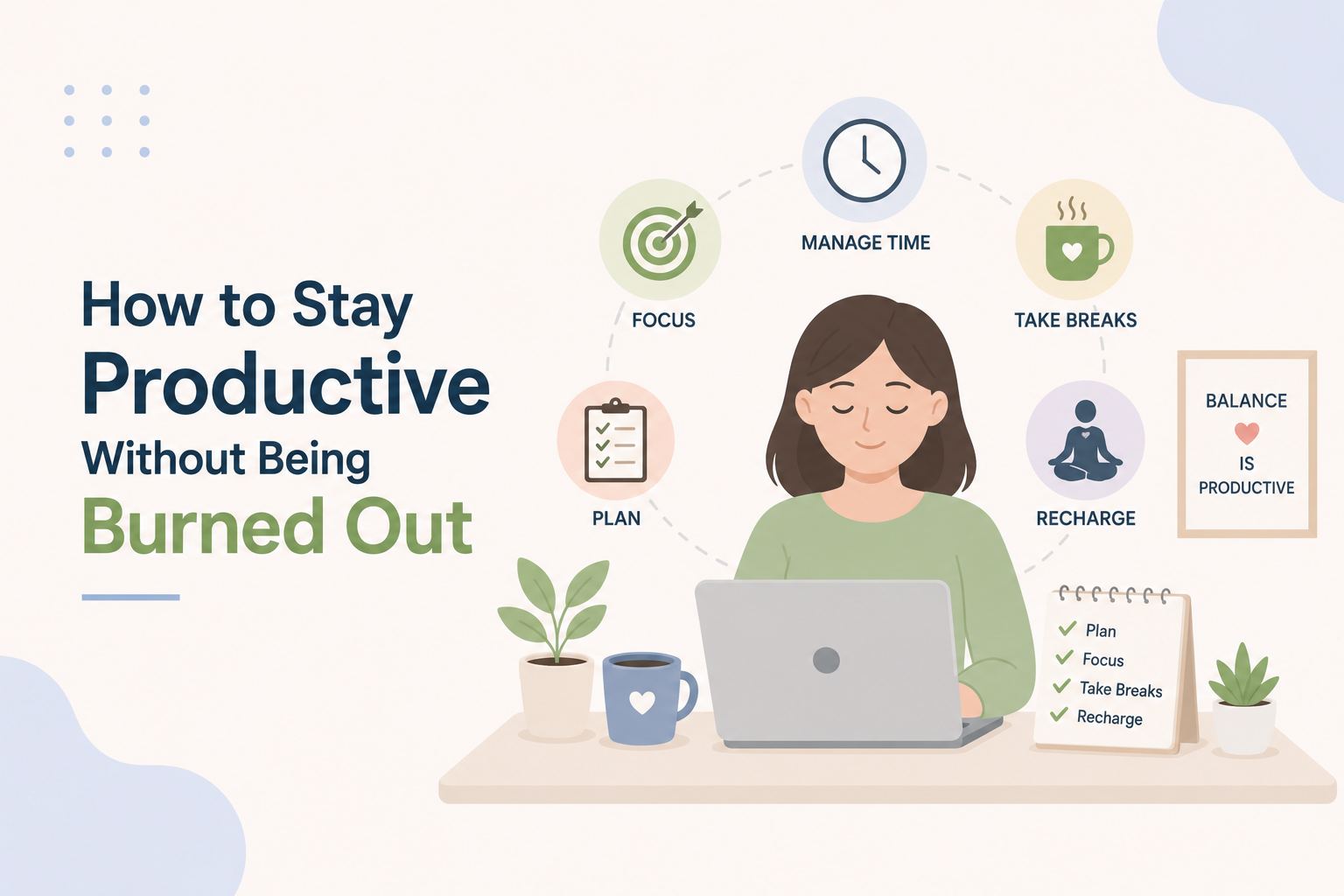
Here’s how to stay productive, focused, and energized without burning out.
What Does Productivity Really Mean?
Productivity is not merely about the quantity of tasks completed, but the quality and impact of that work. It’s about achieving meaningful outcomes efficiently. True productivity involves understanding your goals, prioritizing your efforts, and utilizing your time and energy in a way that yields the best results. It’s a dynamic process that requires continuous evaluation and adaptation, rather than a static measure of output.
Being productive is not about trying to accomplish everything on your to-do list; rather, it is about focusing on what truly matters. This involves making consistent progress on meaningful tasks, emphasizing quality over quantity, and maintaining steady effort over time to achieve lasting results. When you focus on impact rather than activity, you reduce unnecessary pressure and conserve energy.
Tangen (2002) notes that although productivity may seem straightforward, it is often confused with production. Simply producing more does not automatically mean greater productivity, it must be evaluated against benchmarks, standards, or changes over time.
Focus on Priorities Instead of Multitasking
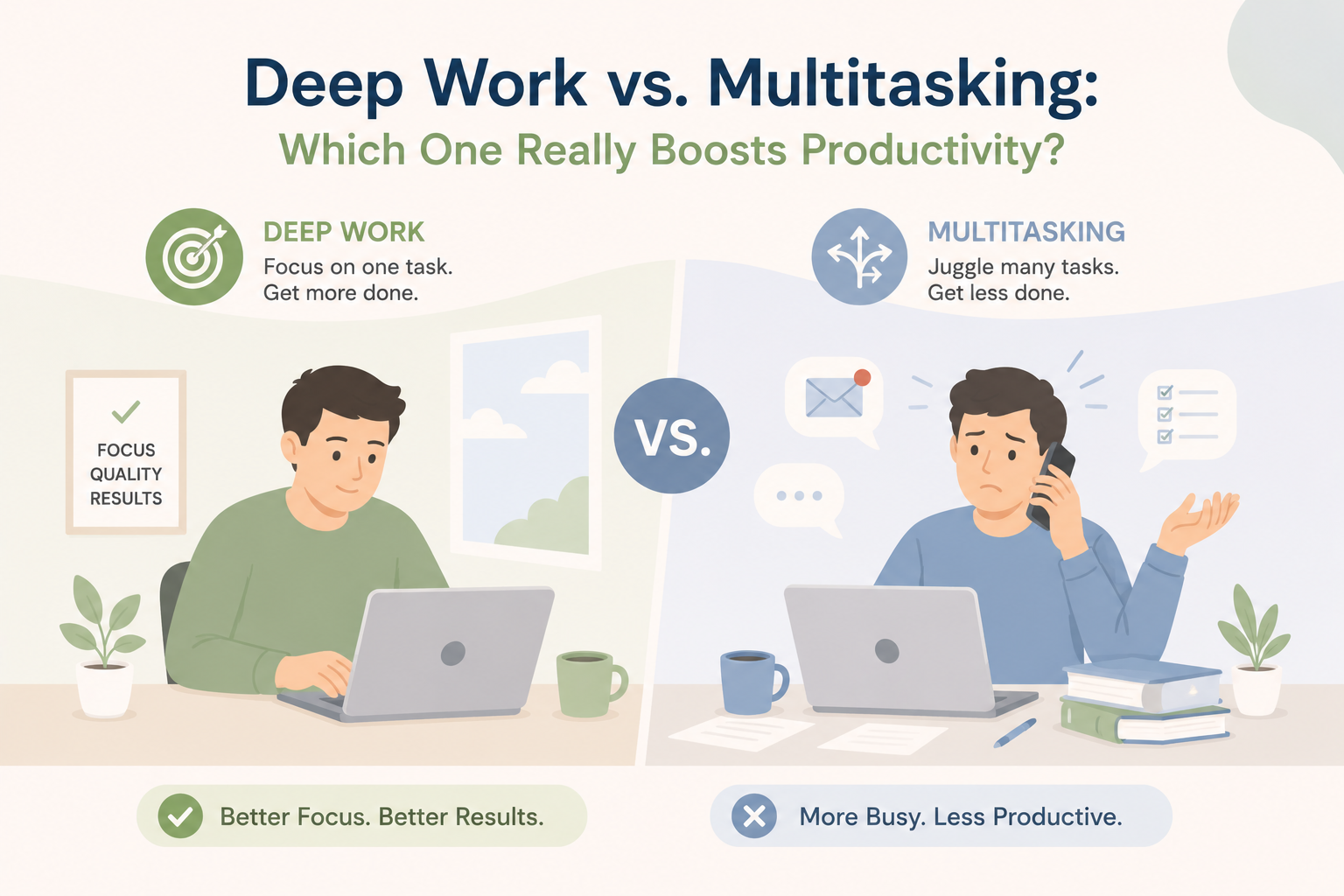
Multitasking is often perceived as a hallmark of high productivity, but research suggests it’s a myth. Rapidly switching between tasks actually reduces efficiency and increases errors. Instead, adopt a “single-tasking” approach. Identify your most important tasks for the day or week and dedicate focused blocks of time to complete them without interruption. This allows for deeper concentration, higher quality work, and a greater sense of accomplishment. Utilizing tools like the Eisenhower Matrix or the Pomodoro Technique can help in prioritizing and managing these focused work sessions.
Multitasking might feel productive, but it often leads to mental fatigue and lower quality work. A better approach is to focus on your top three priorities for the day, tackling one task at a time and completing it before moving on to the next. Single-tasking helps you stay focused, maintain high-quality work, and avoid the mental overload that leads to burnout.
Instead of trying to do everything at once, it’s more effective to focus on prioritizing your tasks. Research shows that multitasking often reduces productivity because constantly switching between tasks divides attention and increases the time it takes to finish work (AMGtime, 2018).
Prioritization is a skill that can be developed. Start by listing all your tasks and identifying which ones require immediate attention or contribute the most value to your goals or organization. By organizing tasks based on urgency and importance, you can manage your time more effectively and focus on what truly matters. (Indeed Career Guide, 2023).
If a project feels overwhelming, break it into smaller, manageable steps. Focusing on one step at a time, rather than trying to tackle everything simultaneously, helps maintain focus and reduces stress (Cal Newport, 2016).
How to Manage Your Energy for Better Productivity
Just like a battery, our energy levels fluctuate. Sustainable productivity hinges on understanding and managing your personal energy cycles. Identify when you are most alert and focused, and schedule your most demanding tasks during these peak times. Conversely, use lower-energy periods for less cognitively intensive activities like responding to emails or administrative tasks. Adequate sleep, regular physical activity, and a balanced diet are foundational to maintaining consistent energy levels throughout the day.
Pay attention to when you feel most alert and focused, and schedule your most demanding tasks during those high-energy periods. Save lighter, less demanding work for your low-energy times, and avoid forcing productivity when your body needs rest. Respecting your natural rhythm can significantly boost both efficiency and overall well-being.
Everyone experiences natural energy highs and lows throughout the day, often referred to as circadian rhythms. Paying attention to when you feel most alert and focused can help you schedule your most demanding tasks during these high-energy periods (Harvard Health, 2020). Conversely, save lighter or routine work for your low-energy times, and avoid pushing yourself to be productive when your body needs rest. By aligning tasks with your natural rhythm, you can boost efficiency, reduce stress, and improve overall well-being (American Psychological Association, 2019).
The Importance of Taking Breaks to Avoid Burnout
Take Breaks, they’re part of being productive.Short breaks can improve focus, reduce stress, and prevent mental exhaustion. Regular breaks are not a sign of slacking. They are essential for preventing burnout and maintaining cognitive function. Short, frequent breaks (e.g., 5-10 minutes every hour) can significantly improve focus, creativity, and problem-solving abilities. Stepping away from your work allows your mind to rest and recharge, preventing mental fatigue. Longer breaks, such as a lunch break away from your desk, are crucial for a complete mental reset. Incorporating movement, mindfulness, or a brief social interaction during breaks can further enhance their restorative effects.
Gupta, S. (2023, April 19) tackled one widely used method is the Pomodoro Technique, which alternates 25 minutes of focused work with 5-minute breaks, balancing productivity and rest.
Set Boundaries to Protect Your Time and Mental Health
Overcommitting is one of the fastest paths to burnout. You don’t need to do everything or please everyone. Protect your time and energy by establishing clear boundaries, declining tasks that don’t align with your goals, and leaving room in your schedule to recharge. Prioritizing your well-being is essential to sustainable productivity.
Clear boundaries are vital for protecting your time, energy, and mental well-being. This involves learning to say “no” to requests that overextend you or do not align with your priorities. Establish specific work hours and stick to them as much as possible, avoiding the temptation to constantly check emails or work late into the evening. Communicate your boundaries to colleagues and loved ones to manage expectations. This proactive approach prevents your work from encroaching on your personal life, which is crucial for long-term sustainability.
Self-Care Habits That Support Long-Term Productivity
Productivity is not only about careful planning, it also depends on maintaining your well-being. Prioritize sufficient sleep, balanced nutrition, and regular movement, even in small amounts. Neglecting these fundamental needs can make burnout inevitable, regardless of motivation or effort.
Self-care is not a luxury. it’s a necessity for sustained productivity. Engaging in activities that nourish your mind and body can significantly enhance your capacity to perform. This includes prioritizing sleep, engaging in regular exercise, maintaining a healthy diet, and pursuing hobbies or interests outside of work. Mindfulness practices, meditation, or spending time in nature can also help reduce stress and improve mental clarity. By consistently investing in your well-being, you build resilience against burnout and foster a more sustainable approach to achievement.
Reflect and Adjust
What is effective today may not remain effective tomorrow. It is essential to regularly reflect on your routines and practices:
- Which activities are depleting your energy?
- Which actions contribute to your sense of fulfillment?
- What adjustments are necessary to optimize your workflow?
Productivity should evolve alongside your life, rather than dictate it. True productivity is not about relentless effort or working to exhaustion, it is about establishing sustainable practices that enable growth, performance and well-being. by prioritizing balance, intentionality, and rest. Productivity becomes a supportive tool for your life not a source of burnout.
The journey to productive living without burnout is an ongoing process of reflection and adjustment. Regularly assess your workload, energy levels, and overall well-being. Are your current strategies working? Are you feeling overwhelmed? Take time to review your priorities, your time management techniques, and your self-care routines. Be willing to experiment with different approaches and adapt your methods as needed. This iterative process ensures that you remain on a path of sustainable productivity and personal fulfillment.
Sources
Tangen, S. (2002). Understanding the concept of productivity. In Proceedings of the 7th AsiaPacific Industrial Engineering and Management Systems Conference (APIEMS 2002), Taipei, Taiwan.
AMGtime. (2020). Prioritizing vs multitasking: Key to productivity. AMGtime. https://amgtime.com/blog/prioritizing-vs-multitasking- key-to-productivity/
Indeed Editorial Team. (2025, December 11). 11 prioritization strategies to help you arrange your tasks. Indeed Career Guide. https://www.indeed.com/career-advice/career- development/prioritization-strategies
American Psychological Association. (2019). Why sleep is important. https://www.apa.org/topics/sleep/why
Gupta, S. (2023, April 19). 8 ways to boost your productivity. Verywell Mind. https://www.verywellmind.com/ways-to-boost-your- productivity-7480441

Founder and writer of Wex Insights. Joshua Brillante publishes practical, research-based articles on personal finance, productivity, leadership, and personal development. As Wex Insights continues to grow, he also shares travel insights that encourage lifelong learning, better decision-making, and meaningful personal growth. Learn more about the author