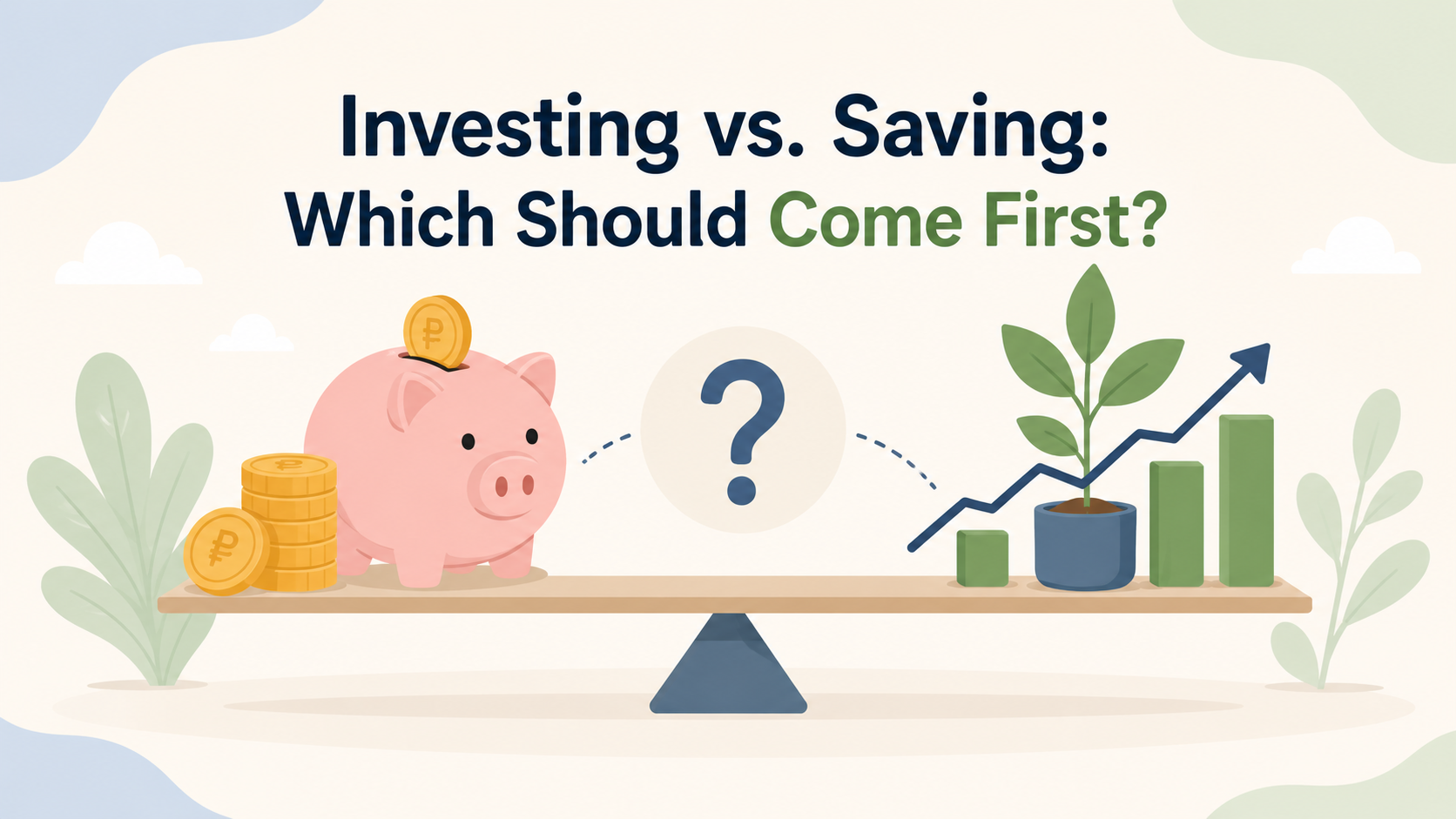
Investing vs. Saving. Navigating the world of personal finance can often feel like a balancing act. Two fundamental pillars of financial well-being are saving and investing. While both are crucial for building wealth and securing your future, understanding their distinct roles and determining the right order for your financial journey is key. This comprehensive guide will delve into the nuances of investing versus saving, helping you make informed decisions about which should take precedence in your financial strategy.
Why Saving is Essential
Before diving into the world of investing, it’s vital to establish a solid foundation through saving. Saving refers to setting aside a portion of your income for immediate or short-term needs, or for specific goals that are relatively close in the future. Learn more about Effective Savings
Investing vs. Saving: Your Financial Safety Net
One of the most critical reasons to prioritize saving is the creation of an emergency fund. This fund acts as a buffer against unexpected life events, such as job loss, medical emergencies, or significant home repairs. Having readily accessible cash can prevent you from derailing your long-term financial plans or accumulating high-interest debt when the unforeseen occurs. A general guideline is to aim for 3-6 months of essential living expenses in an easily accessible savings account.
Funding Your Aspirations
Saving also plays a pivotal role in achieving short-term financial goals. Whether you’re planning for a down payment on a car, a vacation, or a significant purchase, dedicated savings accounts allow you to accumulate the necessary funds without exposing your money to market volatility. These goals typically have a timeframe of one to five years.
Understanding Investing
Investing, on the other hand, involves allocating your money with the expectation of generating a return over the long term. Unlike saving, investing typically involves taking on some level of risk in exchange for the potential for higher growth.
Long-Term Wealth Creation: The Power of Compounding
The primary advantage of investing is its potential to significantly grow your wealth over time, largely due to the power of compounding. Compounding is the process where your investment earnings begin to generate their own earnings, creating a snowball effect. The longer your money is invested, the more time compounding has to work its magic. This makes investing particularly effective for long-term goals such as retirement. Learn money habit here
Diversification and Risk Management
Investing encompasses a wide range of assets, including stocks, bonds, real estate, and mutual funds. A key principle in investing is diversification, which means spreading your investments across different asset classes and sectors. This strategy helps to mitigate risk, as a downturn in one area may be offset by gains in another. Understanding your risk tolerance is crucial when deciding where and how to invest.
Investing vs. Saving: Which Comes First?
The question of whether to invest or save first is a common one, and the answer often depends on your individual financial circumstances and goals. However, a widely accepted financial principle suggests a specific order for optimal financial health.
Investing vs. Saving: Prioritizing an Emergency Fund
Most financial advisors recommend establishing a fully funded emergency fund before significantly engaging in investing. This is because investing, by its nature, involves risk. If you encounter an unexpected financial hardship without an emergency fund, you might be forced to sell your investments at an inopportune time, potentially incurring losses. Once your emergency fund is in place, you can confidently explore investment opportunities. Learn more about Emergency Funds
Balancing Short-Term and Long-Term Goals
While an emergency fund is paramount, it’s also important to consider your short-term goals. If you have a significant purchase planned within the next year or two, it’s generally wiser to save for that goal rather than invest the money, as market fluctuations could jeopardize your ability to meet your deadline. Once your emergency fund is secure and your short-term goals are accounted for, you can then focus on investing for your long-term aspirations, such as retirement.
When to Focus on Investing
Once you have a robust emergency fund and your short-term financial needs are covered, investing becomes the primary driver for long-term wealth accumulation. Click here to learn about Passive Incomes
Securing Your Future
Beyond retirement, investing can help you achieve other ambitious financial milestones, such as funding your children’s education, acquiring a second property, or achieving financial independence earlier than anticipated. The key is consistent, long-term investment aligned with your financial objectives.
FAQs about Saving vs. Investing
Q1: How much should I have in my emergency fund?
A1: A common recommendation is to have 3-6 months’ worth of essential living expenses saved. However, this can vary based on your job stability, dependents, and overall financial situation. Learn more about Emergency Funds
Q2: What are the best ways to save money?
A2: Automating savings by setting up regular transfers from your checking to your savings account, creating a budget to track your spending, and identifying areas where you can cut back are effective saving strategies.
Q3: What are some common investment options for beginners?
A3: For beginners, low-cost index funds, exchange-traded funds (ETFs), and diversified mutual funds are often recommended due to their simplicity and diversification benefits.
Q4: Should I pay off debt before investing?
A4: Generally, it’s advisable to pay off high-interest debt (like credit card debt) before aggressively investing. The interest you’re paying on the debt likely outweighs the potential returns from investing. For lower-interest debt (like some mortgages or student loans), the decision can be more nuanced.
Q5: How often should I review my investment portfolio?
A5: It’s generally recommended to review your investment portfolio at least once a year, or when significant life events occur, to ensure it remains aligned with your financial goals and risk tolerance.
References
Bogle, J. C. (2012). The Little Book of Common Sense Investing: The Only Way to Guarantee to Earn the Future Market Returns. John Wiley & Sons.
Graham, B. (2006). The Intelligent Investor: The Definitive Book on Value Investing. HarperBusiness.
U.S. Securities and Exchange Commission. (n.d.). Save and invest. Investor.gov. https://www.investor.gov/introduction-investing/investing-basics/save-and-invest

Founder and writer of Wex Insights. Joshua Brillante publishes practical, research-based articles on personal finance, productivity, leadership, and personal development. As Wex Insights continues to grow, he also shares travel insights that encourage lifelong learning, better decision-making, and meaningful personal growth. Learn more about the author