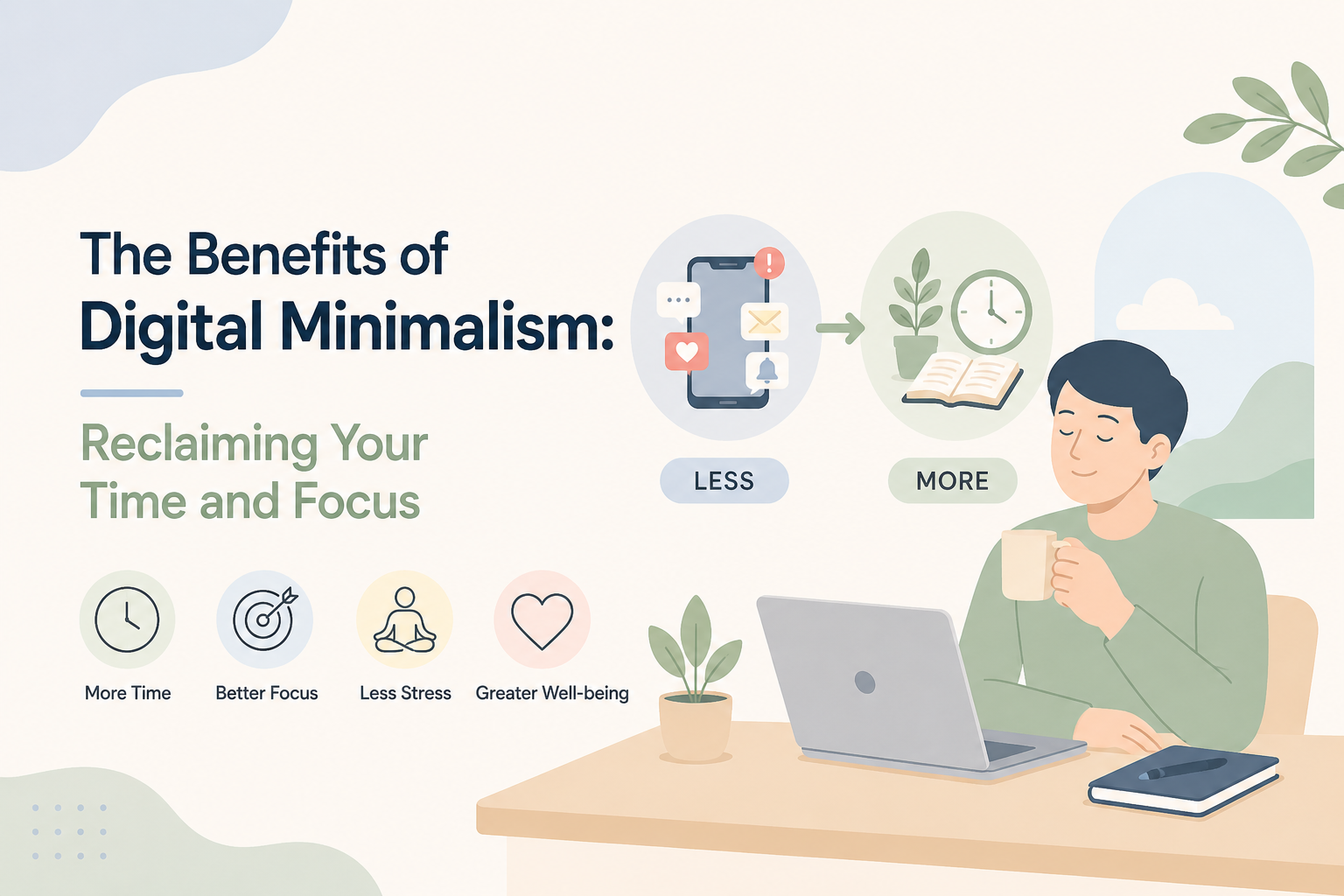
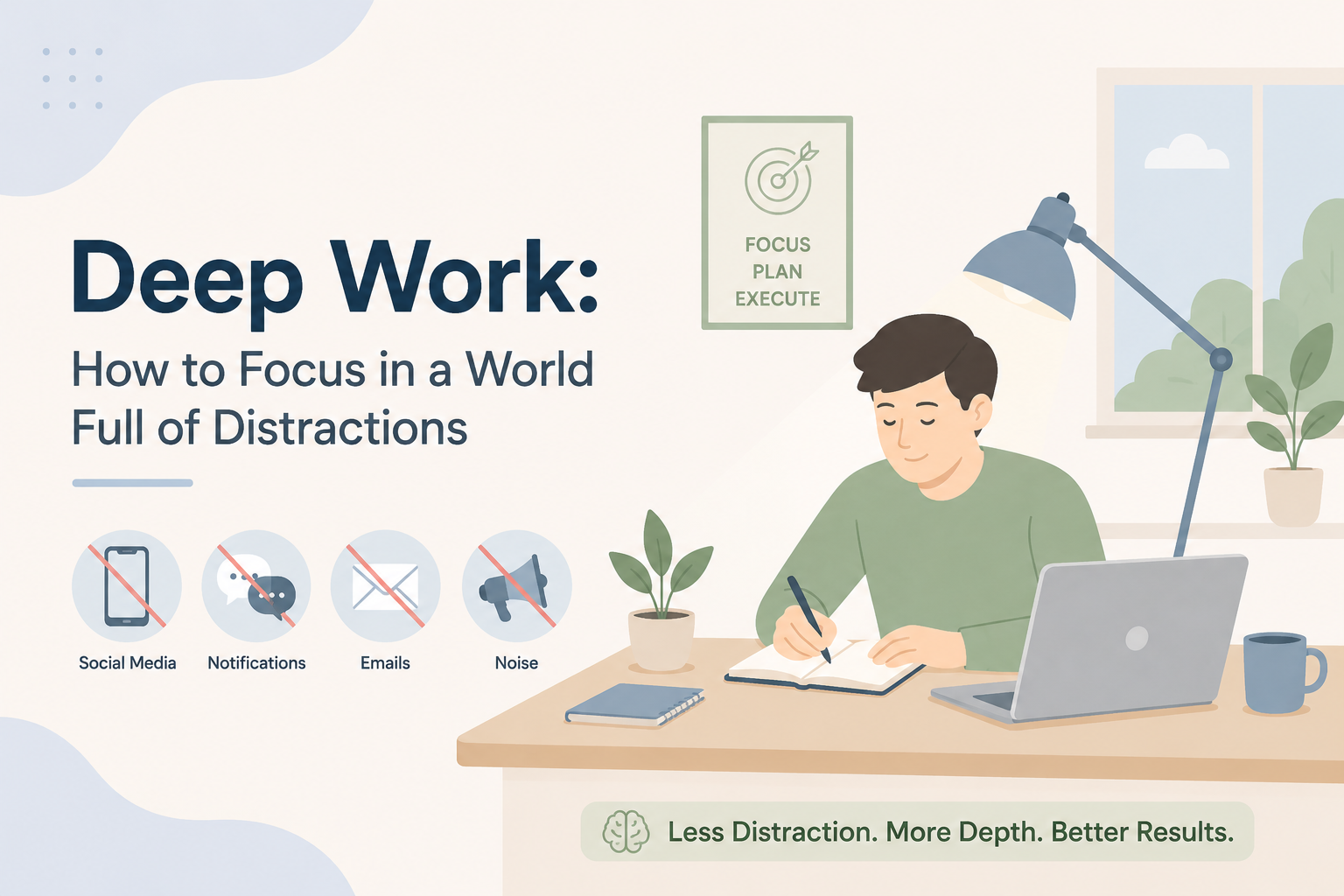
In an era saturated with constant notifications, endless social media feeds, and the pervasive hum of digital connectivity, achieving profound concentration has become a Herculean task. The concept of “Deep Work,” as popularized by Cal Newport, offers a potent antidote. It refers to professional activities performed in a state of distraction-free concentration that push your cognitive capabilities to their limit. These efforts create new value, improve your skill, and are hard to replicate. Understanding the benefits of deep work is the first step towards reclaiming your focus.
The Undeniable Benefits of Deep Work
The advantages of cultivating the ability to engage in deep work are multifaceted and directly impact both professional output and personal fulfillment. By minimizing shallow, fragmented tasks and dedicating focused blocks of time to cognitively demanding activities, individuals can unlock significant improvements.
One of the primary benefits of deep work is enhanced productivity. When you’re not constantly context-switching, your brain can operate at peak efficiency. Complex problems are tackled more effectively, leading to higher quality output in less time. This isn’t just about doing more; it’s about doing better.
Furthermore, deep work is intrinsically linked to skill development. By dedicating sustained attention to challenging tasks, you are actively strengthening neural pathways and acquiring new knowledge or refining existing abilities. This continuous learning and mastery are crucial for long-term career growth and staying relevant in rapidly evolving fields. The benefits of deep work extend to increased creativity. When the mind is free from interruptions, it has the space to make novel connections between ideas, leading to innovative solutions and breakthroughs.
Finally, the sense of accomplishment derived from completing demanding tasks through deep work contributes significantly to job satisfaction and a feeling of purpose. It shifts the focus from merely checking off items on a to-do list to genuinely contributing meaningful value.
Implementing Deep Work Strategies: A Technical Approach
Adopting a deep work methodology requires a structured and intentional approach. It’s not simply about deciding to focus; it’s about creating an environment and a routine that supports it.
1. Define Your Deep Work Blocks: Identify specific periods in your day or week where you can dedicate uninterrupted time to your most important tasks. These blocks should be scheduled and protected as fiercely as any critical meeting. Consider the benefits of deep work when allocating these times.
2. Minimize Distractions: This is paramount. Turn off notifications on all devices. Close unnecessary browser tabs. Inform colleagues or family members about your focus periods. For a more rigorous approach, consider using website blockers or working in a dedicated, quiet space. The benefits of deep work are maximized when external noise is silenced.
3. Develop Rituals: Create pre-work rituals that signal to your brain that it’s time to focus. This could involve preparing your workspace, brewing a specific type of tea, or listening to instrumental music. These routines help transition you into a state of concentration.
4. Embrace Boredom: In our hyper-stimulated world, we often shy away from moments of downtime. However, embracing boredom allows your mind to wander and make connections, which is crucial for creativity and problem-solving. This is one of the often-overlooked benefits of deep work.
5. Track Your Progress: Monitor your deep work sessions. How long were you able to focus? What tasks did you accomplish? This data can help you refine your strategies and identify patterns that either support or hinder your concentration.
FAQs about Deep Work
Q1: What are the primary benefits of deep work?
A1: The main benefits of deep work include increased productivity, enhanced skill development, greater creativity, and improved job satisfaction.
Q2: How can I overcome the urge to check my phone during deep work sessions?
A2: This requires discipline and practice. Strategies include turning off notifications, placing your phone out of sight, using app blockers, and reminding yourself of the benefits of deep work and the importance of your current task.
Q3: Is deep work only for knowledge workers?
A3: While the concept is particularly relevant for knowledge workers, the principles of focused attention and minimizing distractions can be applied to any profession or personal pursuit where concentrated effort leads to better outcomes.
Q4: Can I achieve deep work while working remotely?
A4: Yes, remote work can even offer advantages for deep work by allowing you to control your environment more effectively. However, it also presents unique challenges like home distractions, requiring robust self-discipline and clear communication with household members.
Q5: How much deep work should I aim for daily?
A5: The ideal amount varies per individual and their profession. Cal Newport suggests aiming for at least 90 minutes to a few hours of uninterrupted deep work daily, but even shorter, consistent periods can yield significant benefits of deep work.
References
Newport, C. (2016). Deep Work: Rules for Focused Success in a Distracted World. Grand Central Publishing.
The University of California, Irvine. (n.d.). The Cost of Interrupted Work: More Speed, Less Accuracy.

Founder and writer of Wex Insights. Joshua Brillante publishes practical, research-based articles on personal finance, productivity, leadership, and personal development. As Wex Insights continues to grow, he also shares travel insights that encourage lifelong learning, better decision-making, and meaningful personal growth. Learn more about the author