Saving Money vs. Building Wealth: Understanding the Crucial Distinction
In the realm of personal finance, the terms “saving money” and “building wealth” are often used interchangeably, creating a common misconception. While both are vital for financial well-being, they represent distinct objectives, methodologies, and ultimately, outcomes. Understanding this fundamental divergence is not merely an academic exercise; it’s a cornerstone for anyone seeking to optimize their financial trajectory and achieve lasting prosperity. This blog post aims to illuminate this critical distinction, providing a clear roadmap for navigating the path from financial security to financial freedom.
The Foundation: Saving Money
Saving money is the bedrock of sound financial management. At its core, saving is the act of deferring consumption. It involves consciously setting aside a portion of your income, typically in readily accessible accounts like savings or checking accounts. The primary objectives of saving are multifaceted:
- Meeting Short-Term Goals: Saving allows for planned expenditures such as down payments for a car, funding a vacation, or purchasing desired items without incurring debt.
- Creating an Emergency Fund: This is perhaps the most crucial aspect of saving. An emergency fund acts as a financial buffer against unforeseen events like job loss, medical emergencies, or unexpected home repairs, preventing the need to go into debt during times of crisis.
- Financial Stability: Consistent saving contributes to an overall sense of financial security, providing peace of mind knowing that a portion of your income is being protected.
The emphasis in saving is on preservation and liquidity. While essential for immediate needs and protection, the growth of funds held in traditional savings accounts is often minimal, frequently lagging behind inflation. This means that over time, the purchasing power of saved money can erode. Effective expense management is a prerequisite for successful saving, as it frees up disposable income that can then be allocated to savings goals.
The Engine of Prosperity: Building Wealth
Building wealth, conversely, is a far more dynamic and strategic undertaking that transcends mere accumulation. It is a proactive process focused on increasing your net worth through astute investment and asset appreciation. Wealth building involves deploying capital into assets that have the potential to generate returns exceeding inflation and consumption.
Key characteristics of wealth building include:
- Strategic Investment: This involves allocating funds to a diverse range of investment vehicles such as stocks, bonds, real estate, mutual funds, and potentially alternative investments. The goal is to select assets that are likely to grow in value over time.
- Making Money Work for You: The core principle of wealth building is to leverage your capital to generate passive income and capital gains. This means your money is actively working to create more money, rather than simply sitting idle.
- Longer Time Horizon and Risk Tolerance: Unlike saving, which prioritizes immediate access, wealth building often requires a longer-term perspective. It also typically involves a greater willingness to accept some level of risk, as investments may experience short-term fluctuations in value.
- Asset Appreciation: Wealth building focuses on acquiring assets that increase in value over time, thereby expanding your net worth.
The ultimate aim of wealth building is not just to have money, but to create a sustainable financial ecosystem that provides financial freedom and long-term security. This necessitates a proactive approach to managing not only expenses but also investments, and a deep understanding of the interplay between income, savings, and investment returns.
The Divergence Explained
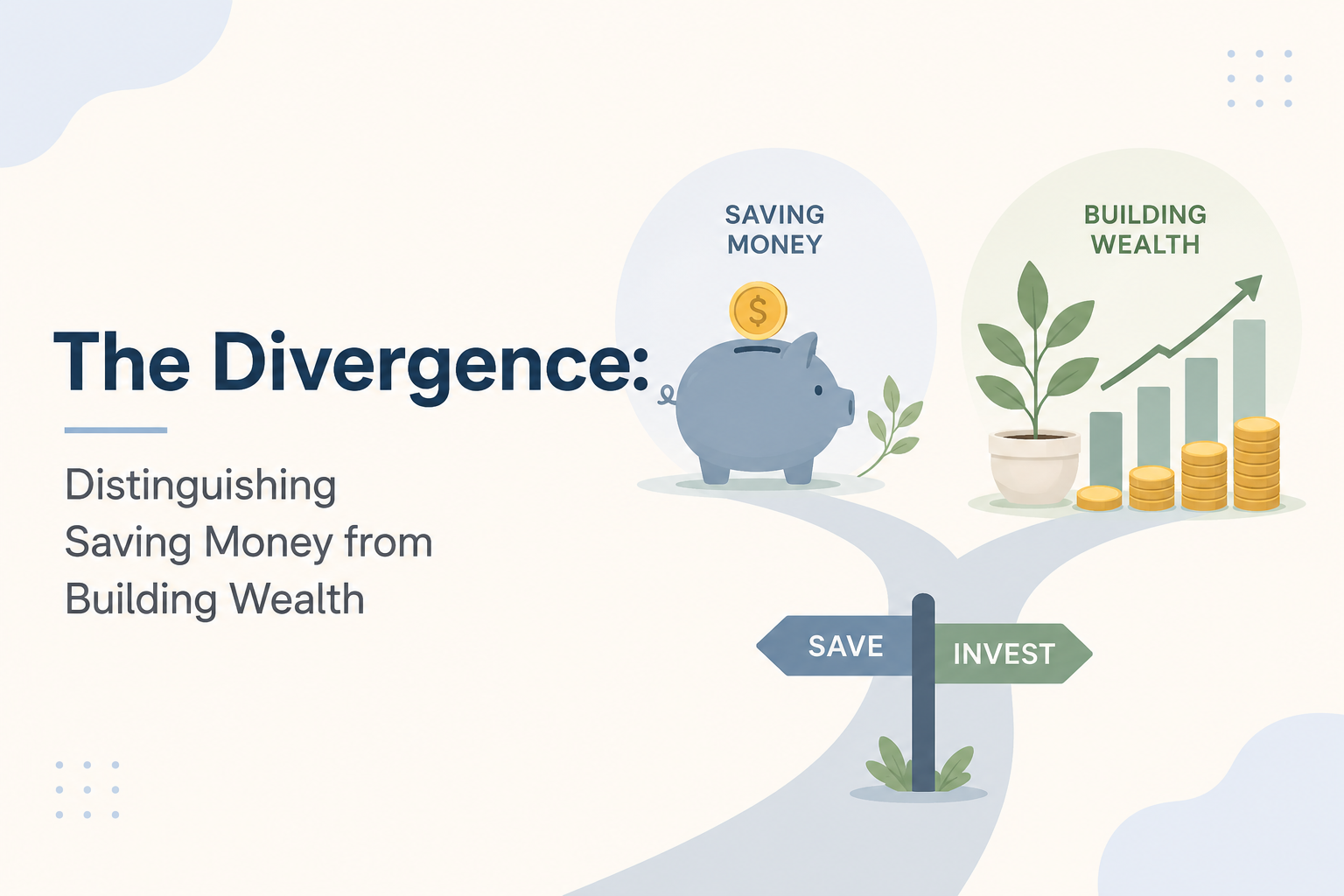
In essence, saving money is the crucial prerequisite for financial security. It provides the essential safety net and enables planned expenditures. Building wealth, on the other hand, is the engine of financial prosperity. It transforms saved capital into a growing asset base that generates ongoing income and appreciates in value, paving the way for a more affluent future.
Professionals who grasp this distinction can move beyond simply putting money aside. They can strategically allocate their resources, transitioning from a mindset of passive accumulation to one of active wealth creation. This strategic shift is what separates those who merely manage their finances from those who actively cultivate their financial future.
Frequently Asked Questions (FAQs)
Q1: Can I build wealth without saving money first?
A1: While it’s theoretically possible to start investing with very small amounts, saving money provides the foundational capital needed for meaningful investments. An emergency fund, built through saving, also protects your investments from being liquidated during unforeseen events. Therefore, saving is generally a necessary precursor to effective wealth building.
Q2: Is saving money a waste of time if it doesn’t grow much?
A2: No, saving money is never a waste of time. Its primary purpose is financial security and liquidity. While it may not offer significant growth, it provides essential stability and enables you to reach short-term goals without resorting to debt. It’s the necessary first step before you can effectively begin building wealth.
Q3: How much money should I have in an emergency fund?
A3: A commonly recommended guideline is to have three to six months’ worth of essential living expenses saved in an easily accessible account. The exact amount can vary based on your job security, dependents, and overall financial stability.
Q4: What are some examples of assets used for building wealth?
A4: Common assets for wealth building include stocks, bonds, real estate (residential or investment properties), mutual funds, exchange-traded funds (ETFs), and in some cases, commodities or precious metals.
Q5: At what point should I transition from saving to wealth building?
A5: Once you have established a solid emergency fund and are consistently meeting your basic savings goals, you can begin to allocate a portion of your income towards investment for wealth building.
References
“The Psychology of Money: Timeless Lessons on Wealth, Greed, and Happiness” by Morgan Housel
“Your Money or Your Life: 9 Steps to Transforming Your Relationship with Money and Achieving Financial Independence” by Vicki Robin and Joe Dominguez
“The Intelligent Investor” by Benjamin Graham

Founder and writer of Wex Insights. Joshua Brillante publishes practical, research-based articles on personal finance, productivity, leadership, and personal development. As Wex Insights continues to grow, he also shares travel insights that encourage lifelong learning, better decision-making, and meaningful personal growth. Learn more about the author