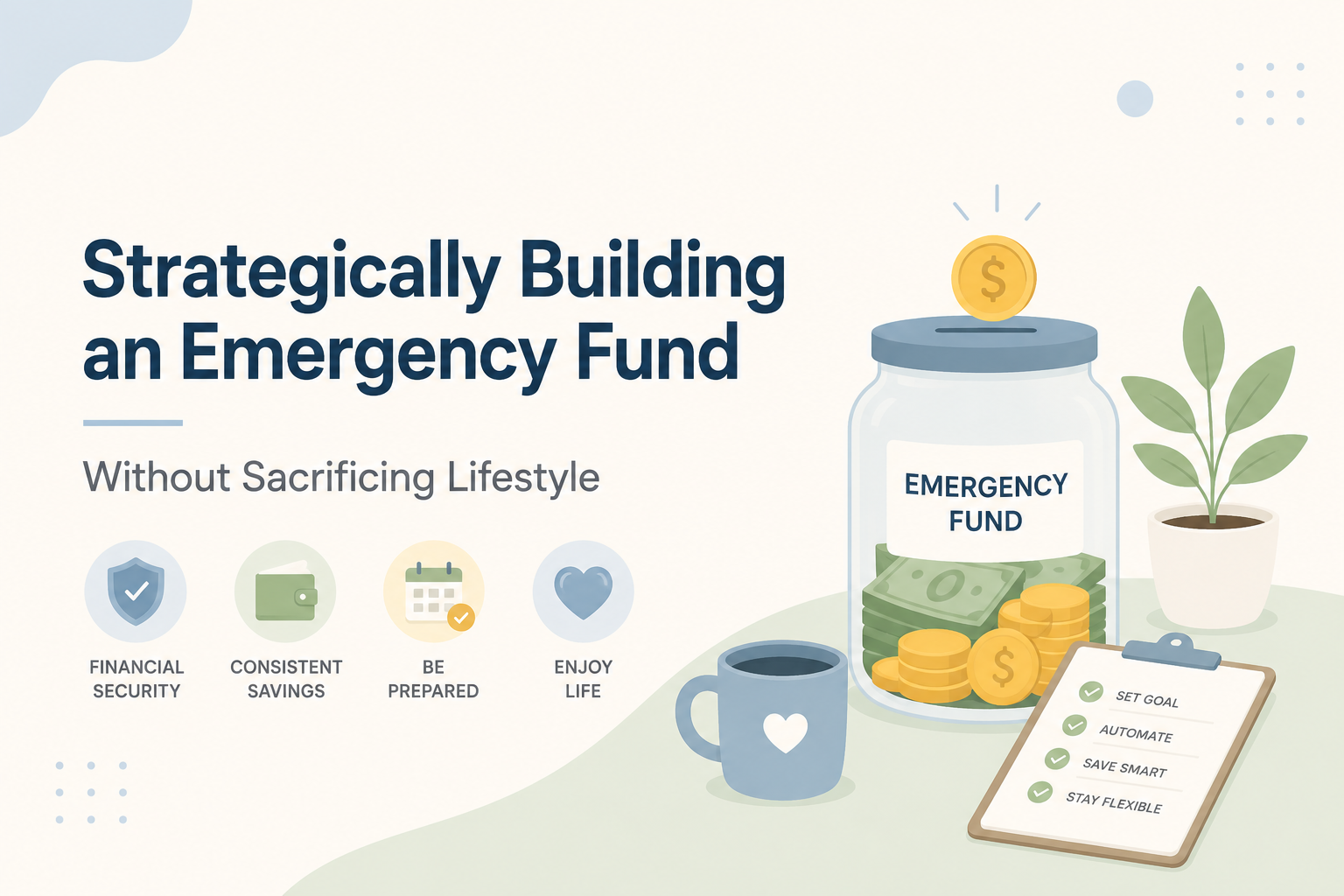
Establishing an emergency fund is a cornerstone of robust personal finance management. For professionals, particularly those with established careers and financial commitments, the prospect of allocating significant capital towards an emergency fund can sometimes conjure images of drastic austerity and lifestyle deprivation. However, a technically sound approach can facilitate the accumulation of substantial emergency reserves without necessitating a dramatic reduction in discretionary spending or overall quality of life. This document outlines a structured methodology for building an emergency fund without sacrificing lifestyle.
The fundamental objective of an emergency fund is to provide a financial buffer against unforeseen events, such as job loss, medical expenses, or significant home/auto repairs. A commonly recommended benchmark is three to six months of essential living expenses. To achieve this without feeling deprived, a systematic and data-driven strategy is paramount.
1. Precise Expense Quantification: Building an Emergency Fund Without Sacrificing Your Lifestyle
The initial step involves a meticulous analysis of current expenditures. This transcends a cursory overview; it requires granular categorization of all outlays. Professionals, accustomed to analytical tasks, can leverage spreadsheets or financial management software to track spending across categories like housing, transportation, utilities, food, debt servicing, insurance premiums, and discretionary spending (entertainment, dining, hobbies). This detailed breakdown provides a clear, objective picture of where funds are allocated.
2. Identifying Non-Essential Expenditure Reduction
Once expenditures are quantified, the next phase involves identifying areas where marginal reductions can be implemented without significantly impacting lifestyle. This is not about eliminating enjoyable activities but rather optimizing them. For instance, analyzing subscription services for underutilized platforms, evaluating dining-out frequency versus home-prepared meals, or seeking more cost-effective alternatives for recurring purchases. The technical aspect here is in the marginal utility assessment of each expenditure, allowing you to build an emergency fund without sacrificing lifestyle by making smarter choices.
3. Algorithmic Savings Allocation for build an emergency fund without sacrificing lifestyle
Rather than relying on ad-hoc savings, a structured allocation process is more effective. This can involve setting up automatic transfers from checking to a dedicated savings account immediately after payday. This “pay yourself first” principle ensures that a predetermined portion of income is consistently directed towards the emergency fund before it can be allocated to discretionary spending. The amount of this automatic transfer can be incrementally increased as non-essential expenditures are identified and reduced.
4. Leveraging Windfalls and Incremental Income for Your Emergency Fund
Unexpected financial gains, such as tax refunds, bonuses, or small inheritances, can significantly accelerate emergency fund growth. A technically disciplined approach would be to earmark a substantial, if not the entirety, of these windfalls for the emergency fund. Similarly, any incremental income, such as a minor salary increase or a side hustle, can be strategically directed towards this goal.
5. Optimizing Savings Vehicles for Emergency Fund Growth
The choice of where to hold emergency funds is also a technical consideration. While liquidity is paramount, utilizing high-yield savings accounts or money market accounts can provide a modest return on the accumulated capital, thereby slightly offsetting inflation and enhancing the growth rate of the fund. These vehicles offer a balance between accessibility and yield.
By adopting a technically rigorous and analytical approach to personal finance, professionals can effectively build robust emergency funds. This methodology emphasizes data-driven decision-making, strategic optimization of expenditures, and consistent allocation, thereby ensuring financial security without the perceived burden of deprivation. The key lies in understanding the precise financial landscape and implementing targeted, efficient strategies.
FAQs About Building an Emergency Fund Without Sacrificing Lifestyle
Q1: What is the ideal amount to have in an emergency fund?
A1: A generally accepted guideline is to have three to six months of essential living expenses saved. This provides a solid buffer for unexpected events.
Q2: How can I track my expenses effectively?
A2: Utilizing financial management apps, spreadsheets, or even a detailed notebook can help you categorize and track every dollar spent, providing the data needed for informed decisions.
Q3: Is it possible to build an emergency fund while still enjoying life?
A3: Absolutely. The key is to identify non-essential spending that can be optimized or reduced marginally, rather than eliminated entirely. This allows for continued enjoyment while prioritizing savings.
Q4: What are “windfalls” and how should they be used for an emergency fund?
A4: Windfalls are unexpected financial gains like tax refunds, bonuses, or gifts. Strategically allocating a significant portion, or even all, of these towards your emergency fund can dramatically accelerate its growth.
Q5: Where is the best place to keep an emergency fund?
A5: For accessibility and safety, high-yield savings accounts or money market accounts are ideal. They offer a modest return while ensuring your funds are readily available when needed.

Founder and writer of Wex Insights. Joshua Brillante publishes practical, research-based articles on personal finance, productivity, leadership, and personal development. As Wex Insights continues to grow, he also shares travel insights that encourage lifelong learning, better decision-making, and meaningful personal growth. Learn more about the author