In today’s hyper-connected world, social media platforms have become an omnipresent force, shaping how we communicate, consume information, and even how we think. While offering undeniable benefits in terms of connection and information dissemination, the constant barrage of notifications, updates, and curated content raises a critical question: How does social media affect focus and productivity? This blog post delves into the multifaceted ways these platforms can either enhance or hinder our ability to concentrate and get things done, exploring the mechanisms at play and offering insights for navigating this digital landscape more effectively.
Understanding the Mechanisms: Why Social Media is So Gripping
Social media platforms are meticulously designed to capture and hold our attention. This is achieved through several psychological and technological mechanisms:
Variable Reward Schedules: Similar to slot machines, social media delivers unpredictable rewards (likes, comments, new posts). This variability makes engagement highly addictive, as we’re constantly checking for the next potential reward.
Fear of Missing Out (FOMO): The constant stream of updates creates a sense of urgency and the fear that we might be missing out on important news, social interactions, or trends. This drives frequent checking and engagement.
Dopamine Hits: Each notification, like, or positive interaction triggers a release of dopamine, a neurotransmitter associated with pleasure and reward. This creates a feedback loop that encourages repeated use.
Algorithmic Personalization: Platforms use sophisticated algorithms to tailor content to our perceived interests, making the experience highly engaging and difficult to disengage from.
The Detrimental Effects of Social Media on Focus
While designed for engagement, these very features can significantly erode our ability to focus and maintain productivity:
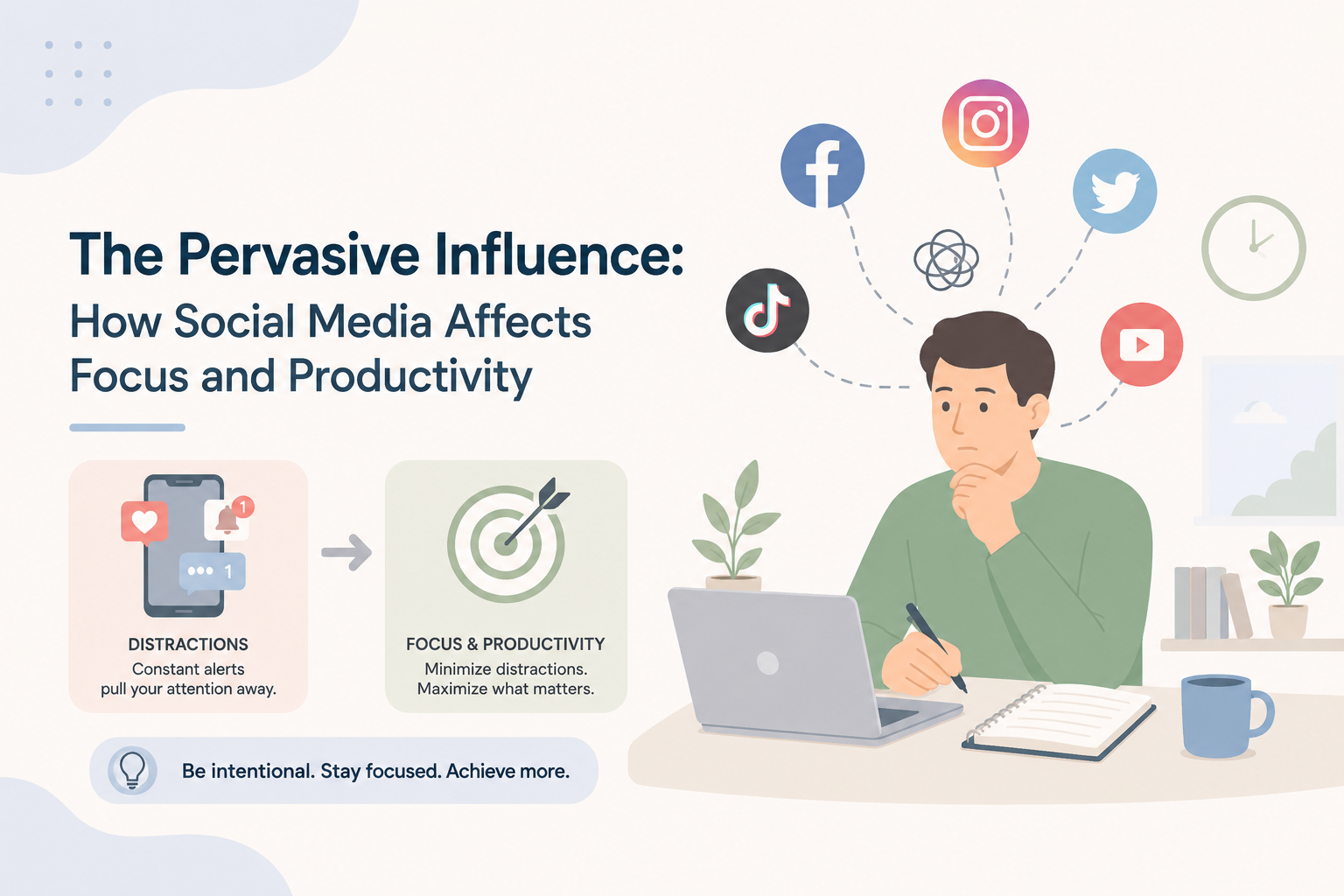
Constant Distractions and Interruption: The incessant stream of notifications pings, vibrations, and visual alerts shatters our concentration, forcing our brains to switch contexts. Even a brief glance can disrupt deep work and require significant effort to regain focus.
Reduced Attention Span: The rapid-fire nature of social media content, with its short videos and bite-sized information, trains our brains to expect constant novelty and immediate gratification. This can make it challenging to engage with longer, more complex tasks that require sustained attention.
Task Switching Costs: Each time we switch from a primary task to check social media, there’s a cognitive cost. Our brains need time and mental energy to re-establish the context and focus of the original task, leading to a cumulative loss of productivity.
Procrastination and Time Displacement: Social media can easily become a go-to tool for procrastination. What starts as a quick check can easily spiral into prolonged scrolling, consuming valuable time that could have been dedicated to work, study, or other important activities.
Mental Fatigue: The constant mental effort of processing information, managing notifications, and resisting the urge to engage can lead to mental fatigue, making it harder to concentrate on demanding tasks.
Potential Benefits of Social Media for Productivity (When Used Mindfully)
Despite its drawbacks, social media is not inherently detrimental to productivity. When approached strategically, it can even offer some advantages:
Information Gathering and Research: Platforms can be valuable tools for staying updated on industry news, discovering new resources, and connecting with experts in a field.
Networking and Collaboration: Social media facilitates professional networking, allowing individuals to connect with peers, mentors, and potential collaborators, which can indirectly boost productivity by opening new avenues.
Knowledge Sharing and Learning: Participating in relevant online communities or following educational accounts can provide opportunities for continuous learning and skill development.
Inspiration and Motivation: Exposure to success stories, innovative ideas, and motivational content can sometimes provide the spark needed to tackle challenging projects.
Strategies for Mitigating Negative Impacts and Enhancing Productivity
To harness the benefits of social media while minimizing its disruptive effects on focus and productivity, consider implementing the following strategies:
Set Clear Boundaries and Time Limits: Allocate specific times for checking social media and use app timers or blocking tools to enforce these limits.
Turn Off Non-Essential Notifications: Disable notifications for all but the most critical apps to reduce constant interruptions.
Schedule Social Media Use: Treat social media like any other task and schedule dedicated blocks of time for it, rather than allowing it to interrupt your workflow.
Practice Mindful Consumption: Be intentional about what you consume. Unfollow accounts that are not adding value or are distracting.
Implement “Deep Work” Sessions: Designate periods for uninterrupted work, during which all distractions, including social media, are eliminated.
Batch Similar Tasks: Group tasks that involve checking social media or responding to messages together to minimize context switching.
Create a Dedicated Workspace: Design your workspace to be free from distractions, both physical and digital.
Conclusion: Reclaiming Your Focus in the Digital Age
The pervasive influence of social media on our focus and productivity is undeniable. While these platforms offer powerful tools for connection and information, their design inherently challenges our ability to concentrate. By understanding the psychological mechanisms at play and implementing proactive strategies, we can reclaim our attention, mitigate the negative impacts, and leverage social media as a tool rather than allowing it to become a master. The key lies in mindful engagement, setting clear boundaries, and consciously choosing how and when we interact with the digital world to protect and enhance our productivity.
Frequently Asked Questions (FAQs)
Q1: How can I stop myself from constantly checking social media during work hours?
A1: Implement strategies like turning off notifications, using website blockers, setting strict time limits for social media use, and scheduling specific times to check your accounts. Creating a distraction-free workspace is also crucial.
Q2: Does social media permanently damage attention spans?
A2: While prolonged, unmanaged use can contribute to a reduced attention span, it’s not necessarily permanent. By practicing mindful consumption and engaging in activities that require sustained focus, you can retrain your brain.
Q3: Can social media actually be good for productivity?
A3: Yes, when used strategically. Social media can be a valuable tool for research, networking, learning, and inspiration. The key is to use it intentionally and not let it become a source of constant distraction.
Q4: What are the most common productivity killers related to social media?
A4: The most common killers include constant notifications, the fear of missing out (FOMO), easy access for procrastination, and the cognitive cost of task switching between work and social media.
Q5: How can I balance staying connected with maintaining focus?
A5: The balance comes from intentionality. Schedule your social media interactions, be selective about who and what you follow, and prioritize your focused work periods. Think of social media as a tool to be used, not an environment to be passively inhabited.
You might also like
How to Stop Wasting Time on Low-Value Tasks
Deep Work: How to Focus in a World Full of Distractions
Signs You’re Experiencing Burnout
References
Alter, A. (2017). Irresistible: The Rise of Addictive Technology and the Business of Keeping Us Hooked. Penguin Press.
Bremmer, I. (2018). Us vs. Them: The Future of Identity in an Unequal World. Basic Books.
Carr, N. (2011). The Shallows: What the Internet Is Doing to Our Brains. W. W. Norton & Company.
Newport, C. (2019). Deep Work: Rules for Focused Success in a Distracted World. Grand Central Publishing.
Rosen, L. D. (2017). The Distracted Mind: Ancient Brains in a High-Tech World. Palgrave Macmillan.

Founder and writer of Wex Insights. Joshua Brillante publishes practical, research-based articles on personal finance, productivity, leadership, and personal development. As Wex Insights continues to grow, he also shares travel insights that encourage lifelong learning, better decision-making, and meaningful personal growth. Learn more about the author